Showing posts with label Acting. Show all posts
Showing posts with label Acting. Show all posts
Monday, 3 February 2020
Wednesday, 2 January 2019
Mesmerized

The Dragon and the Unicorn: The Perilous Order of Camelot (Volume 1)
by A. A. Attanasio
narrated by Pippa Rathborne
is available to buy on Audible,
Amazon and iTunes
The
evolution of Merlin and of Ygraine and Uther, the parents of the Once and Future King,
re-imagined through a unique blend of mythology, science fiction and
ancient history.
I got to looking forward to the next installment, for the
aesthetic rush of your performance that invariably left me feeling
uplifted, strengthened. Somehow – magically! – your artistic élan
brightened my own mundane history. That’s the authentic power of art! Thank you for bringing that power to my novel.
I am mesmerized by the voice you have given this novel
A. A. Attanasio describing
Pippa Rathborne's
narration of
THE DRAGON AND THE UNICORN
A. A. Attanasio describing
Pippa Rathborne's
narration of
THE DRAGON AND THE UNICORN

Sunday, 29 July 2018
"Darling! The set was wonderful"
It’s one of those site-specific shows in which the lead actress, in the title role of “Sweet Melancholy”, is upstaged by a live, cooing, flying prop; the play is in blank verse, and the director, after blaming everyone else at the Tech Rehearsal, has lost the plot; but the set design is wonderful....

Melancholy, as you know it, was never this sweet. This looks more like Wistful Posing, though maybe you have missed the point about contemporary self-consciousness. Mid-drama, she, Melancholy, looking as pretty as possible, rearranges her drapery and takes a selfie.
You would be at a loss for words when you congratulate your friend afterwards, if it wasn't for Vien's sophisticated colour scheme, daring to put Melancholy's acid yellow dress against a dark grey background, and his dedication to historical detail in the props and furniture, pioneering a fashion in neoclassical home interiors.
The smoke from the antique brazier is scented, sending the front rows, especially the critics, into drowsy raptures. That might explain the liminal moment when you thought you heard the dove speak.
You travelled far to get here, to a disused temple in an inaccessible part of the old City, where no buses dare to stop. You took three wrong turns on your way from the station. You are dismayed by the thought of missing connections on the long journey home, and arriving tired and dispirited in the lonely night.
You imagine yourself slumped unprettily on a chair, holding your head in your hands, mourning your losses, knowing that bad as the day has been, there is always hope tomorrow will be worse.
You promise yourself that if you can ever afford it - ach, if only you'd got that film job the other day - you will buy a neoclassical upholstered chair and incense-burner, and recline elegantly in a full-length, yellow silk gown, to sweeten your own melancholy.
You are not lying when you reassure Sweet Melancholy that, "You looked like a goddess on that set, and deserve awards just for acting with that pigeon."

Joseph-Marie Vien Sweet Melancholy 1756.
Cleveland Museum of Art. Image: Wikipedia
Cleveland Museum of Art. Image: Wikipedia
You would be at a loss for words when you congratulate your friend afterwards, if it wasn't for Vien's sophisticated colour scheme, daring to put Melancholy's acid yellow dress against a dark grey background, and his dedication to historical detail in the props and furniture, pioneering a fashion in neoclassical home interiors.
The smoke from the antique brazier is scented, sending the front rows, especially the critics, into drowsy raptures. That might explain the liminal moment when you thought you heard the dove speak.
You travelled far to get here, to a disused temple in an inaccessible part of the old City, where no buses dare to stop. You took three wrong turns on your way from the station. You are dismayed by the thought of missing connections on the long journey home, and arriving tired and dispirited in the lonely night.
You imagine yourself slumped unprettily on a chair, holding your head in your hands, mourning your losses, knowing that bad as the day has been, there is always hope tomorrow will be worse.
You promise yourself that if you can ever afford it - ach, if only you'd got that film job the other day - you will buy a neoclassical upholstered chair and incense-burner, and recline elegantly in a full-length, yellow silk gown, to sweeten your own melancholy.
You are not lying when you reassure Sweet Melancholy that, "You looked like a goddess on that set, and deserve awards just for acting with that pigeon."
Saturday, 17 June 2017
Why won't the patient take his medicine?

Will this country die from obstinacy?
Increased support among European nations including UK for EU following Brexit
Cassandra, Cassandra, You're fated to madness, it's out of your hands Destined to say what no one wants to know
Wednesday, 15 March 2017
Monogamy wars

The darker the times, the lighter the entertainments.
LADY WHILTON'S WEDDING
by Barbara Metzger, read by Pippa Rathborne
available on Amazon, Audible and iTunes

Portrait of Lieutenant General the Hon. Sir Charles Stewart, K.B., in hussar uniform by Sir Thomas Lawrence.
The 1814 'Londonderry' version of Lawrence's portrait of the future 3rd Marquess of Londonderry, wearing the medal he was awarded for service as a commander in the Peninsular War.
Lawrence was the visual propagandist of Regency romance and glamour. He gave all his sitters the gloss of celebrity makeovers, and made every portrait look like a love affair in paint. Image: Wikipedia
Thursday, 15 December 2016
Enchanted Winter

Winter by Boucher, 1735. Image: WGA
New audiobook published specially to cheer up the end of this year and celebrate the new:
AN ENCHANTED CHRISTMAS
an anthology of romantic Christmas themed stories
by Barbara Metzger, read by Pippa Rathborne

Available on Audible, Amazon and iTunes
Ghosts, magic and mistletoe wreathe these stories about the redemptive powers of love and laughter.
This new selection of Barbara Metzger's shorter romantic comedies is read by Pippa Rathborne in a special Christmas audiobook, available now and in the New Year, to cast enchantment over the Brexit -Trump winter.
AN ENCHANTED CHRISTMAS
Sunday, 8 May 2016
The Female Traveller

Lady Mary Wortley Montagu (1689 - 1762) in Turkish dress by Liotard c. 1756, the Baths Palace, Warsaw
Pippa Rathborne reads THE WRONG SHADE OF YELLOW by Margaret Eleanor Leigh
for sale on Audible, iTunes and Amazon
for sale on Audible, iTunes and Amazon

Wednesday, 27 April 2016

Friday, 22 April 2016

Monday, 28 December 2015

Sunday, 6 December 2015
Travels in Audioland continued

New audiobook available on iTunes, Audible and Amazon
Pippa
Rathborne narrates Margaret Eleanor Leigh's recent picaresque
adventures across three continents in search of personal Utopia
which turns out to be....
THE WRONG SHADE OF YELLOW
Sunday, 8 November 2015
Night reading

photo © Martin Hübscher
Woman in the middle of reading Vickie Lester's novel "It's In His Kiss".
Listen to the first chapters on Vickie Lester's blog BEGUILING HOLLYWOOD
Listen to the first chapters on Vickie Lester's blog BEGUILING HOLLYWOOD
Wednesday, 21 October 2015
"A life larger than the sentence" (2)

photo by Martin Hübscher
Flight into High Fantasy:
The audiobook of THE DRAGON AND THE UNICORN by A.A. Attanasio, read by Pippa Rathborne,
is available on Amazon, Audible and iTunes.
is available on Amazon, Audible and iTunes.
If you would like a complimentary copy, please contact me by email or leave a message on the comment section of Pippa Rathborne's blog by clicking here and I will be delighted to send you a promo code.
Wednesday, 27 May 2015

Monday, 25 May 2015

Thursday, 2 April 2015


Thursday, 12 March 2015
The Power of Pink
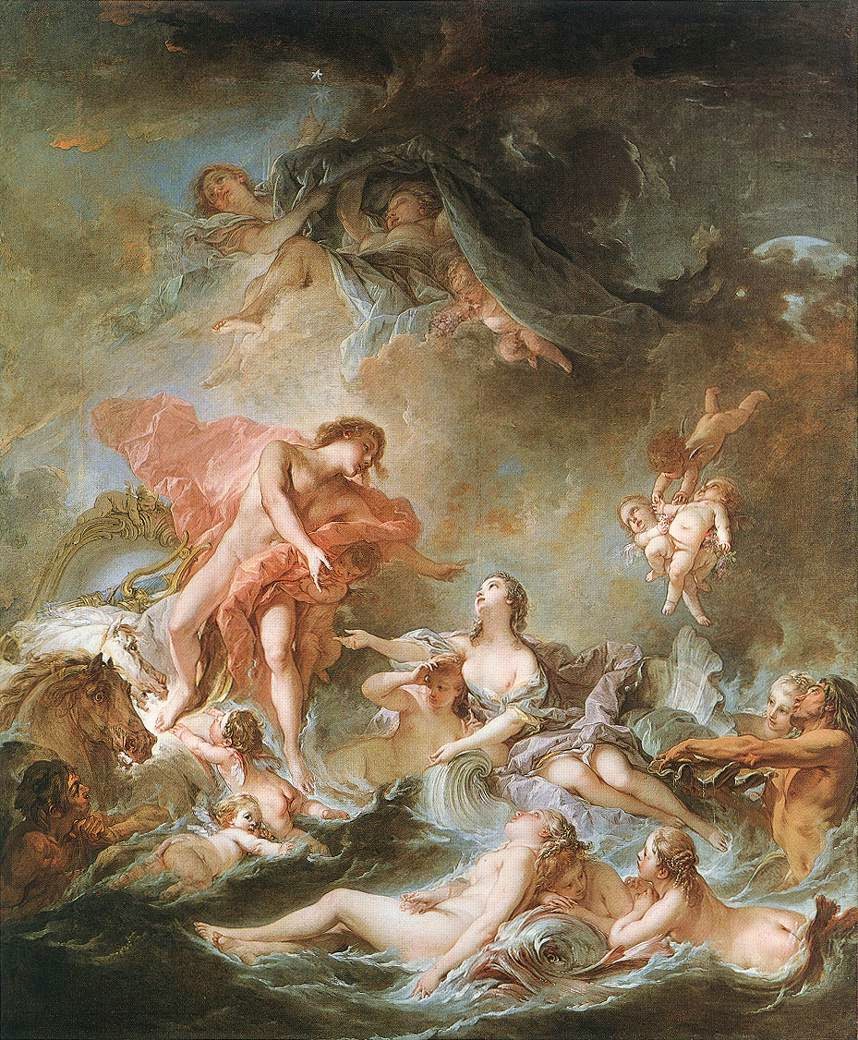
Boucher The Setting of the Sun, Wallace Collection. Image: WGA
Madame de Pompadour is welcoming Louis XV to bed
Wednesday, 17 December 2014
In this world and the next
“Perhaps in the next world women will be more valued than they are in this.” SARAH SIDDONS (1755 - 1831)
PART THREE: An obvious conclusion

Sarah Siddons as Zara in
Congreve's tragedy 'The Mourning Bride', engraving by after painting by
Thomas Lawrence, 1783. Image © Victoria and Albert Museum. This is the
face of a determined, passionate, brave, intelligent individual,
transcending gender. "Independence I will ever secure..." Mary Wollstonecraft.
"...she did look so beautiful! It is a part I like to see her act extremely." Sally Siddons, writing in a letter on February 8th, 1799, about her mother as Zara.
"...she did look so beautiful! It is a part I like to see her act extremely." Sally Siddons, writing in a letter on February 8th, 1799, about her mother as Zara.
She craved social acceptance, for herself and her children. She was more interested in improving her life through her art than suffering for it. In private, this passionate artist was conventional, religious and moral. She never compromised her right to have a career, children and a husband, and she earned it all herself.
Frequently when Wollstonecraft wrote about an emancipated woman, independent of men and men's money, she unintentionally described Siddons: “It is time to effect a revolution in female manners - time to restore to them their lost dignity - and make them, as a part of the human species, labour by reforming themselves to reform the world. It is time to separate unchangeable morals from local manners.”
“Independence I have long considered as the grand blessing of life, the basis of every virtue; and independence I will ever secure by contracting my wants, though I were to live on a barren heath.” Mary Wollstonecraft wrote the words; you can hear Sarah Siddons saying them.
Tuesday, 18 November 2014
Romantic Fictions and Casualties
Part Four:
The Prophetess and the Muse
Shortly after the death of the eldest daughter of The Tragic Muse, whom he had once thought he loved, in the same year of 1803, the artist found his ideal of physical and intellectual femininity personified in an elegant and composed woman, a refined and independent spirit who understood his temperament and his art. She was about the same age as the daughter of tragedy, perhaps a few years older, tall and dark like her, but uncomplicated by illness and sisters.
She was a model of discretion as much as beauty, a social sophisticate who made no demands on him. She did not need marriage to consummate their friendship so not a breath of scandal marred the artist's reputation ever again. Her gratification came from inspiring and guiding him to create works that would invest her with immortality by association. She was his perfect muse.

The shining culmination of the artist's love of his muse:
Sir Thomas Lawrence. Mrs. Jens Wolff, 1803 - 1815.
© The Art Institute of Chicago, Mr. and Mrs. W. W. Kimball Collection.
At the time she first met Lawrence, Isabella Anne Hutchinson was unhappily married to the Danish diplomat and art collector Jens Wolff from whom she later separated in 1810.
At the time she first met Lawrence, Isabella Anne Hutchinson was unhappily married to the Danish diplomat and art collector Jens Wolff from whom she later separated in 1810.
He spent twelve years painting her portrait, and it was the most emotionally tender image of a woman he ever created.
The éclat of her splendid aquiline profile, gracefully bent in contemplation of Michelangelo's drawings, recalled the artlessly drooping head of the dead girl he had tried to love, listening to her own thoughts, composing her own songs. If he had been a woman, this was how he would like to have been painted, and loved.
The Tragic Muse carried on working for a few more years after her eldest daughter's death, but she had lost some of her elemental power. The people no longer worshipped as before. They demanded to see her in the same parts, then criticized her for using “her great guns” too soon, never caring that the goddess in person really was "in paroxysms of agony".[1]
Her presence had always been monumental, but now her body had grown so heavy that could not get up without help during performances. People felt sorrier for the woman herself than the characters she was playing.

William Blake,Hecate or the Three Fates c. 1795. Tate Gallery, London.
Image source: WGA
Despite her habit of standing outside herself, so she could control the effect she was making, mortality had overrun her divine gift. Either her own emotions had burst their banks and flooded the character she was imagining, or public taste in deities was changing....
Saturday, 14 April 2012
Best Actor Award for Playing the King
CHARLES II'S POLICY OF AMUSEMENT
Everybody acts a part to some degree; for politicians and princes it is part of the job description. The statesman and writer, the Marquess of Halifax (1633 - 95), in A Character of King Charles II called dissembling a Jewel in the Crown and warned: “Princes dissemble with too many, not to have it discovered.”

Charles II, attended by some of his favourite spaniels, being presented by the Royal
Gardener, John Rose, with the first pineapple grown in England, painted by
Hendrick Danckerts, c.1675.
Image source: Wikipedia
Image source: Wikipedia
One of Machiavelli's observations was
that princes must act the dual role of lion and fox, and that those who succeed
most imitate the fox, which they should conceal by
being "a great simulator and dissimulator".
Charles II was as capable and ambitious as
his more powerful, and despotic, contemporary, Louis XIV of France. The cousins were both embittered by the humiliating
experiences of rebellions in their youth. Though Charles presided over a far more informal
court than Versailles, it was still his personality that dominated but through a "careless grandeur" [Aphra Behn] not the ritualized terror of the Sun King.
He kept his real feelings and
beliefs, if he had any at all, hidden behind the suave persona that has passed
into historical legend, the “witty king Whose word no man relies on”
[Rochester].
He was "gracious”, “debonair and easy of access”, according
to John Evelyn, who, while deploring the king’s easy nature that made him prey
to crafty advisors, profuse mistresses and messy spaniels, admired his natural
gifts and energy.
Rochester, for all he shared Charles’
sex addiction and moral sceptiscim, was just as frustrated as Evelyn by the
waste of potential, the possibility of a glorious reign and a happy people
dissipated by indolence and indifference, and the defensive dissembling,
“sharpened by misfortunes”[Halifax], that hardened into a habit.
The weight of expectation at the
Restoration, as at the outset of any reign, was unrealistic; Charles, even if
he had been a more hard-working and candid king, would have incurred the
disappointment of believers, as happened to Obama.
Charles Stuart was the monarch of a divided nation, of irreconcilable political, moral, religious and racial differences.
The character of King Charles became
the prototype for a saturnine romantic fictional hero, the man who would have
been an excellent prince but for a fatal flaw; the disillusioned rake with a
kind heart; the sybarite who got up early in the morning to play tennis, and
who rode his own horse to victory at Newmarket races; the predatory satyr who
was a doting father; the cynical politician who trusted nobody and was
romantically in love with his sister, Minette; flippant and gracious to the
end, apologizing for his unconscionable time dying, solicitous about his most
vulnerable mistress's welfare ("don't let poor Nelly starve"), polite
to his wife, who of course adored him, hoping, true to the fantasy of women who
love philanderers, that deep down, he loved her best.
And perhaps that is the secret of his
charm for all of us: he is one of those historical or fictional figures who
seduce our imaginations like intimate friends, giving us the illusion that we
know him and would have fun with him.
Underneath, all he wanted was to
survive, and had no scruples how he did so. He had learned by his early
twenties that "the use of speech is to conceal the
thoughts." [Machiavelli again.]
He is the only known double agent to have been a
reigning king: the anointed Head of the Church of England who safeguarded a
Protestant succession after his Roman Catholic brother, and was always
secretly Roman Catholic himself, at last received into the faith while he was
dying; his whole personality a self-invented baroque illusion that he controlled
so other men would not control him.
He famously enjoyed the public theatre,
which flourished under his patronage and that of the literary members of his
court, like Rochester and Buckingham, sensual, moral and intellectual nihilists
who also understood the power of illusion.
Elizabeth I had turned dissembling and
prevaricating in the cause of the Crown into an art form, as much part of the
performance of ruling, along with sceptres and orbs, as of statecraft; but she
was always loyal to her ministers, and worked with them, even if she did not
personally like them, while Charles preferred to play them off against each
other and pursue his own secret foreign policy.
He had no concept of responsibility
except for his family and mistresses: he sacrificed two of his most steadfast
and competent adherents, Montrose, the heroic general, and Clarendon, the
statesman, for political expediency. Infidelity and double-dealing became his
reflexes, the vicious feints of his constant charm defensive.
As Rochester complained contemptuously,
Charles could not be relied on. Yet even his shrewdest contemporaries critics, like Halifax, and most modern biographers, male and female, were
glamoured by him. “The merry monarch, scandalous and poor" was “still the easiest
King and best-bred man alive" [Rochester].
Halifax was a serious writer, a practical politician and philosopher, not a high-society gossip, who thought that penetrating this king's character would leave an important lesson to posterity.
At the end of his analysis,
Halifax indulgently forgives the King because of the frail humanity that binds us
all: "What private man will throw stones at him because he loved? Or what
Prince, because he dissembled?" [Halifax: A Character of Charles II].
"Everyone sees what you appear to be,
few experience what you really are"
[Macchiavelli: The Prince]
few experience what you really are"
[Macchiavelli: The Prince]
ESCAPE

One of the series of unintentionally
hilarious paintings of Charles II’s Escape by Isaac Fuller, commissioned
after the Restoration to mythologize the true story of the king’s humility
among the loyal common people who helped him when, disguised as a woodcutter,
he was a fugitive after the Royalist defeat at Worcester in 1651. Charles’
familiar saturnine features are portrayed as they looked in his 30s, not as the
21 year old youth he had been at the time of his greatest danger. [Image source: Wikipedia]
On the same theme
ACTING THE KING
ACTING THE KING
THEATRES OF POWER:
ILLUSION IN THE AGE OF BAROQUE
ILLUSION IN THE AGE OF BAROQUE
For
a professional historian's less infatuated appraisal, readRonald Hutton on
CHARLES II
Subscribe to:
Posts (Atom)