Showing posts with label Art. Show all posts

Friday, 1 June 2018

Sunday, 8 October 2017

Calais Cat

https://pipparathborne.wordpress.com/2017/10/08/calais-cat/
La Vierge au chat (Madonna of the Cat)
Marble relief by Jacques du Broeucq  (c. 1505 – 1584)
Cathédrale Notre-Dame, Saint-Omer, Pas-de-Calais, France.
Image source: WGA

Sunday, 20 November 2016

Living under Democracy in USA and UK, 2016

https://pipparathborne.wordpress.com/2016/11/20/living-under-democracy-in-usa-and-uk-2016/
Two Monkeys by Pieter Brueghel the Elder, 1562
Oil on oak panel, Staatliche Museen, Berlin. Image: WGA

Monday, 14 September 2015

Self-promotion of a nakedly political kind

https://pipparathborne.wordpress.com/2015/09/05/naked-self-promotion-of-an-erotic-and-political-kind/
Sir George Villiers and Lady Katherine Manners as Venus and Adonis 
by Van Dyck c. 1620. Oil on canvas. Private collection. Image WGA

Wednesday, 18 March 2015

The Power of Pink

https://pipparathborne.wordpress.com/2015/03/18/foreshades-of-grey-7-2/
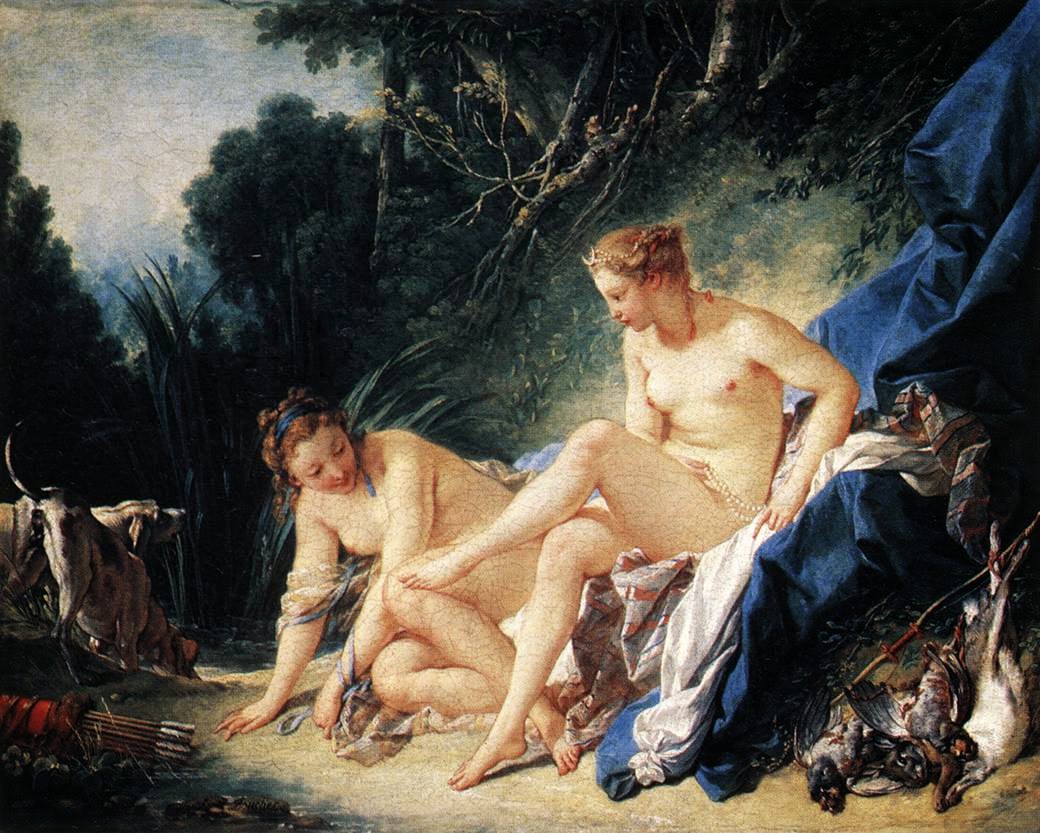
 Boucher, The Blonde Odalisque, traditionally supposed to be Louise O'Murphy, but possibly another blonde...

Thursday, 12 March 2015

The Power of Pink

https://pipparathborne.wordpress.com/2015/03/10/foreshades-of-grey-3/
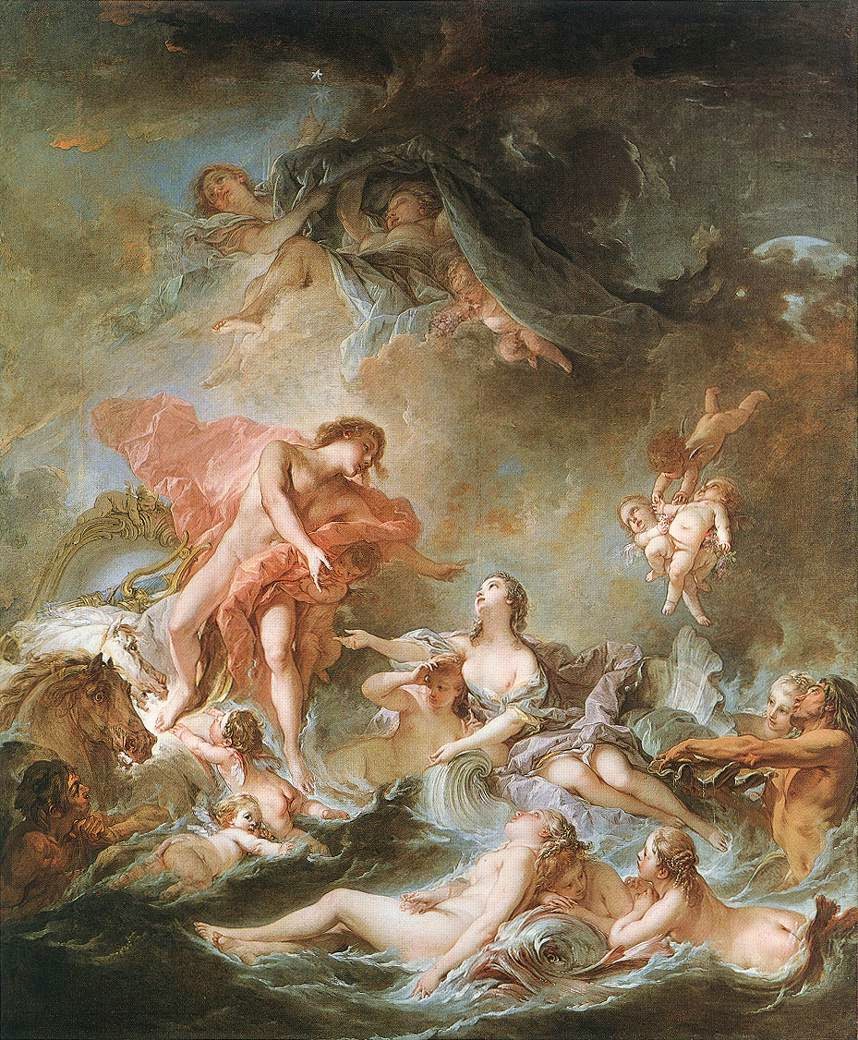
Boucher The Setting of the Sun, Wallace Collection. Image: WGA
Madame de Pompadour is welcoming Louis XV to bed


Wednesday, 17 December 2014

In this world and the next

“Perhaps in the next world women will be more valued than they are in this.” SARAH SIDDONS (1755 - 1831)
PART THREE: An obvious conclusion
 Sarah Siddons as Zara in Congreve's tragedy 'The Mourning Bride', engraving by after painting by Thomas Lawrence, 1783. Image © Victoria and Albert Museum. This is the face of a determined, passionate, brave, intelligent individual, transcending gender. "Independence I will ever secure..." Mary Wollstonecraft.
"...she did look so beautiful! It is a part I like to see her act extremely." Sally Siddons, writing in a letter on February 8th, 1799, about her mother as Zara. 

Sarah Siddons was socially acquainted with Mary Wollstonecraft and only four years older. Temperamentally, the reserved actress, who regulated her emotions and the impulsive, radical feminist, who acted on her desires, were far apart. Siddons did not see herself as a rebel other than in being an actor, which, in the glory days, before it was confused with showing-off, was a form of rebellion in itself.

She craved social acceptance, for herself and her children. She was more interested in improving her life through her art than suffering for it. In private, this passionate artist was conventional, religious and moral. She never compromised her right to have a career, children and a husband, and she earned it all herself.


Frequently when Wollstonecraft wrote about an emancipated woman, independent of men and men's money, she unintentionally described Siddons: “It is time to effect a revolution in female manners - time to restore to them their lost dignity - and make them, as a part of the human species, labour by reforming themselves to reform the world. It is time to separate unchangeable morals from local manners.”


“Independence I have long considered as the grand blessing of life, the basis of every virtue; and independence I will ever secure by contracting my wants, though I were to live on a barren heath.”  Mary Wollstonecraft wrote the words; you can hear Sarah Siddons saying them.

Saturday, 22 November 2014

Out of the killing sun

PART FIVE OF ROMANTIC FICTIONS AND CASUALTIES

 Adam Buck, Two Sisters, print, 1796. London.
© Victoria and Albert Museum, London
Sense and sensibility, reason and passion, love and illusion, neoclassicism and romanticism dancing on the eve of cataclysm.
During the years 1795 to 1797, while the two elder Siddons sisters were engaged in their own danse macabre with Thomas Lawrence, Jane Austen wrote her first draft of the novel that was eventually published in 1811 as Sense and Sensibility.

It should have been the end, the two beautiful girls consumed by passion and disease, but the Tragic Muse had another daughter, only nine years old when her eldest sister died, a child with a name like the peal of golden bells under a blue sky, a tiny Buddha with a ferocious will [1] and eyes that glared like a torch in the night on the charades and vacillations of grown ups. 

After Sir Thomas Lawrence, Cecilia Combe, (née Siddons), 1798. Lithograph by Richard James Lane, printed by Charles Joseph Hullmandel, published by Joseph Dickinson,
May 1830. © National Portrait Gallery, London. She glares out of the picture
with fanatical fervour, lowering her brows like her mother did in dramatic parts.

Her resemblance to the second of her elder sisters was so close in "all the dazzling, frightful sort of beauty that irradiated the countenance of Maria" [2] that she made the Tragic Muse shudder.

She was designated the last companion of the goddess, the comfort of her melancholy age, and custodian of her shrine. For twenty-eight years the purpose of her existence was to serve her mother, who stared back at her with vacant eyes, in "apparent deadness and indifference to everything". [3]

But the youngest daughter had a flame inside her that would not be quenched.  She had a gift denied her sisters. She did not breathe the same fatal air as they had done. She outlived her mother to write her own last act. She was determined that it would be not be a tragic one.

Her sisters' ghosts haunted her girlhood, her memory of them based more on other people’s accounts than her own recollections; they were cautionary figures from myth, glimpsed in faded portraits and drawings, girls who should have been entwined in their youthful loveliness, but were sundered by bitterness, wraiths straying in the seductive heat of their mother's and an artist's imaginations, to fall and drown in the pool of Narcissus.

In 1798, the two elder daughters of the Tragic Muse had pursued love to give them individual identity in a revolutionary world that seemed to offer a new dawn to men and women. They had hoped, like the two young step-sisters who wnent on an adventure of free love with Shelley and Byron in the lakes and mountains of Europe sixteen years later, to find "an immortality of passion."[4]

Saturday, 1 November 2014

Romantic fictions and casualties

“I never should have sung as I do had I never seen you; I never should have composed at all. . . You then liv'd in my heart, in my head, in every idea…” 

 
The Art of Loving or The Pleasant Lesson, furnishing fabric,
Favre Petitpierre et Cie (possibly, maker), ca.1785-1790, detail © Victoria and Albert Museum, London

PART ONE
One autumn long ago, while Britain was at war with revolutionary France, whose armies under Napoleon had conquered most of mainland Europe, and the people at home were rejoicing at Nelson's victory at the Battle of the Nile that saved the Middle East, while Irish rebels were fighting their English oppressors with the help of the French; while Jenner's findings on vaccination against the mass killer small-pox were being published; while a new kind of poetry was being read for the first time in Coleridge and Wordsworth's collection of Lyrical Ballads, while quietly in a village in Hampshire Jane Austen was writing Northanger Abbey, and a new kind of woman appeared in a novel called Maria: or, The Wrongs of Woman by Mary Wollstonecraft; while the external world was spinning and bleeding and crying and laughing, the eldest daughter of the Tragic Muse renounced forever the man she loved. 

He was a charming young artist who painted everyone as if he was in love with them. His pencil, chalk and brush had the power of Cupid's arrows to pierce men and women with the flushed, breathless heat of desire. When he looked at someone, however dull they had felt the moment before, they saw the reflection of beauty in his eyes. 


François-André Vincent, Zeuxis Choosing his Models for the Image of Helen from among the Girls of Croton 1789. 
Oil on canvas. Private collection. Image source: WGA

He was....