Showing posts with label Culture. Show all posts

Sunday, 29 July 2018

"Darling! The set was wonderful"

It’s one of those site-specific shows in which the lead actress, in the title role of “Sweet Melancholy”, is upstaged by a live, cooing, flying prop; the play is in blank verse, and the director, after blaming everyone else at the Tech Rehearsal, has lost the plot; but the set design is wonderful....

 Joseph-Marie Vien Sweet Melancholy 1756.
Cleveland Museum of Art. Image: Wikipedia

Melancholy, as you know it, was never this sweet. This looks more like Wistful Posing, though maybe you have missed the point about contemporary self-consciousness. Mid-drama, she, Melancholy, looking as pretty as possible, rearranges her drapery and takes a selfie.

You would be at a loss for words when you congratulate your friend afterwards, if it wasn't for Vien's sophisticated colour scheme, daring to put Melancholy's acid yellow dress against a dark grey background, and his dedication to historical detail in the props and furniture, pioneering a fashion in neoclassical home interiors.

The smoke from the antique brazier is scented, sending the front rows, especially the critics, into drowsy raptures. That might explain the liminal moment when you thought you heard the dove speak.

You travelled far to get here, to a disused temple in an inaccessible part of the old City, where no buses dare to stop. You took three wrong turns on your way from the station. You are dismayed by the thought of missing connections on the long journey home, and arriving tired and dispirited in the lonely night.

You imagine yourself slumped unprettily on a chair, holding your head in your hands, mourning your losses, knowing that bad as the day has been, there is always hope tomorrow will be worse.

You promise yourself that if you can ever afford it - ach, if only you'd got that film job the other day - you will buy a neoclassical upholstered chair and incense-burner, and recline elegantly in a full-length, yellow silk gown, to sweeten your own melancholy.

You are not lying when you reassure Sweet Melancholy that, "You looked like a goddess on that set, and deserve awards just for acting with that pigeon."

Thursday, 10 March 2016

All is Vanity

Forwarded from Pinterest: The New Yorker Cartoon by Alex Gregory and Conde Nast Published by Nelson Line www.nelsonline.com

Monday, 8 June 2015

Epistolary

The Love Letter by Fragonard. 1770s. Metropolitan Museum of Art, New York. Image: WGA


https://pipparathborne.wordpress.com/2015/06/07/epistolary-2/
 Clarissa Harlowe in the Prison Room of the Sheriff's Office by Landseer, 
exhibited 1833 © Tate Gallery London

TO BOOK PIPPA RATHBORNE AS A NARRATOR, PLEASE LEAVE A COMMENT AT
PIPPA RATHBORNE ACTRESS CONTACT

OR GO TO ACX


Wednesday, 18 March 2015

The Power of Pink

https://pipparathborne.wordpress.com/2015/03/18/foreshades-of-grey-7-2/
 Boucher, The Blonde Odalisque, traditionally supposed to be Louise O'Murphy, but possibly another blonde...

Thursday, 12 March 2015

The Power of Pink

https://pipparathborne.wordpress.com/2015/03/10/foreshades-of-grey-3/
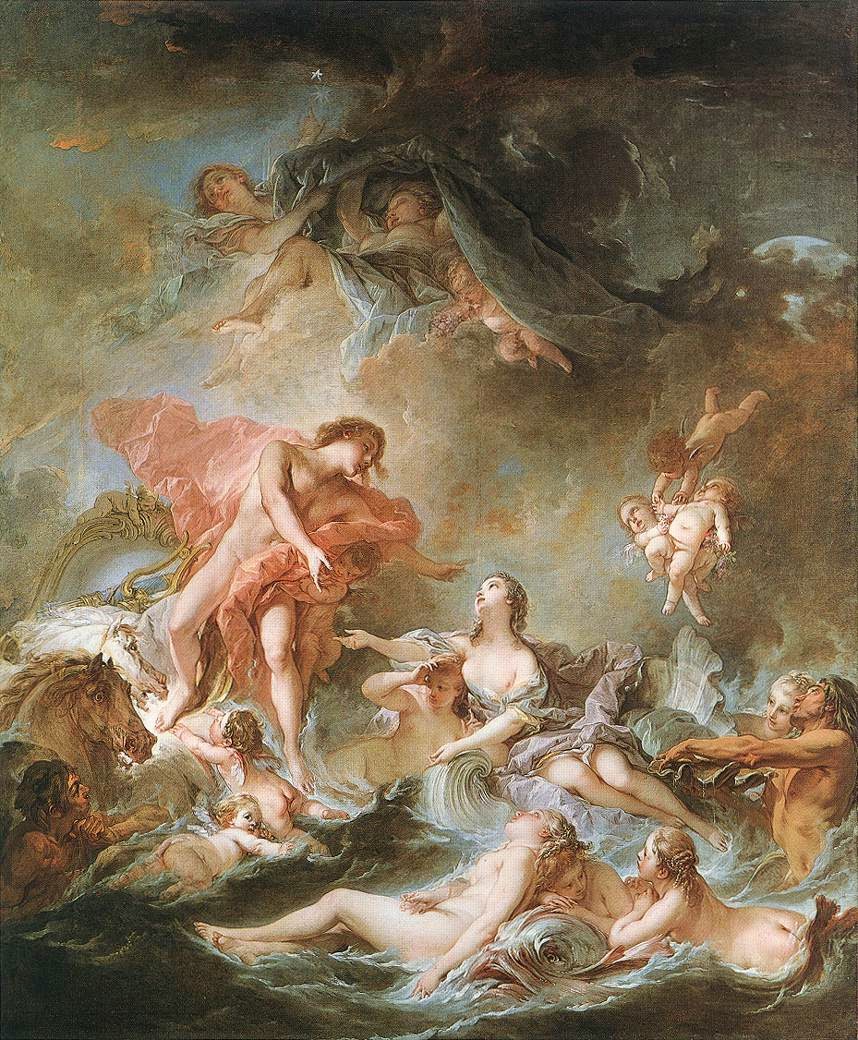
Boucher The Setting of the Sun, Wallace Collection. Image: WGA
Madame de Pompadour is welcoming Louis XV to bed


Friday, 12 December 2014

In this world and the next: a tragedy of gender and celebrity


 Sarah Siddons as Euphrasia in 'The Grecian Daughter'. Print of Pine's painting by the female engraver, Caroline Watson. Published in London by John Boydell, 1st May, 1784. © Victoria & Albert Museum. Euphrasia was one of the parts in which she conquered the London stage on her return in 1782. The heroine triumphs in restoring peace to her country after an extraordinary, even gross, display of filial duty, when she suckles her own father rather than escape to safety from despotic tyranny with her husband and infant son. The mix of sensationalism - the audience enjoyed shrieking along with the heroine - and serious moral about debate a woman's right to determine her public and domestic roles, without becoming a victim, were ideal for Sarah Siddons' stage persona.

 PART TWO - A Woman's Tragedy
Mrs Siddons understood the value of art, both as an aesthetic and a publicity tool. Her collaboration with all the leading portraitists of the day and the subsequent national distribution of prints spread her fame. She was not an easy subject; she was considered a beautiful woman, in her strong featured face, large dark eyes and lithe, graceful body, but, as often happens with expressive, charismatic people, her beauty could not be captured in repose.

Many of the heroic qualities that she was admired for on stage were regarded as unsuitable for a lady in real life. The power she conveyed with the grandeur of her elocution and sweeping, authoritative movements, were supposed to be exclusively masculine attributes. Except for Thomas Lawrence, society portraitists shied away from her forcefulness, emphasizing instead her willowy grace, and the tender beseeching pathos of her raised eyes, rather than showing them blazing with passion under frowning brows.


Sitting in her elegant black plumed hat and blue-striped dress in Gainsborough's 1785 portrait, she looks uneasy, coiled, as if she'd rather spring up and save her country, defy a tyrant, or murder Duncan.


When Lawrence painted Mrs Siddons, rather than avoiding the challenging masculine aspects of her stage persona, the fierce concentration of her gaze, her imposing height and the athletic build of her shoulders and arms (reminiscent of Mrs Freke’s “masculine arms” in Maria Edgeworth’s Belinda), he celebrated them.
 
Mrs Siddons 1804 by Sir Thomas Lawrence 1769-1830
Portrait by Thomas Lawrence, Tate Gallery, London. Image:© Tate, London 2011
The Tragic Muse of Neoclassicism and prophetess of Romanticism in a portrait of 1804, when she was nearing fifty, in which her lifelong friend, Sir Thomas Lawrence displayed her powerful physique and brooding presence with such panache that she looks like a bruiser about to step forward and knock you out. Like many great classical actors she combined masculine and feminine qualities in the authority and sensitivity of her interpretations.


When Lawrence painted Mrs Siddons, rather than avoiding, like other portraitists, the challenging masculine aspects of her stage persona, the fierce concentration of her gaze, her imposing height and the powerful build of her shoulders and arms (reminiscent of Mrs Freke’s “masculine arms” in Maria Edgeworth’s Belinda), he celebrated them.


For the last full-length portrait, after the natural studio light from the high source used by Lawrence faded, she posed by lamplight till two o’clock in the morning, so he could finish the painting in time for the Royal Academy Exhibition of 1804. The night-time sitting caused such slanderous tittle-tattle around town that Mr Siddons had to issue a press statement denying his wife's adultery. Any lady of any age who sat for Lawrence risked seduction - he was dangerous to know while Byron was still a schoolboy. Mrs Siddons and Lawrence were not lovers, they were something even closer, intimate collaborators who understood the demands of each other's arts.


She steps forward towards us as she would have done during one of her Shakespearean readings; the simple composition is neoclassical, except for the free brush work, the great swathes of red and black, the injury in her expression, all suggest emotional disturbance beneath the surface of acting. It was the year after her eldest daughter's death; a younger one had died five years before. With "two lovely creatures gone", their grieving mother, comparing herself to Niobe, had begun to look older and heavier, which Lawrence did not disguise.


There is nothing of the "flattered and pinky" which Farington objected to in some of Lawrence's society portraits. The painting did not go down well at the time, but when you physically enter her presence, the effect is breathtaking, and you suddenly get a sense of her power on stage without even being able to hear her voice.

We think of one as the treasure of the Establishment, rendering female passions socially acceptable, and the other its scourge, but Sarah Siddons and Mary Wollstonecraft had social and cultural affinities....They were only five years apart in age, and well-acquainted.They had to earn their own livings all their adult lives; as young women struggling to establish independent careers, they had both taken jobs as ladies' companions.

What could have been a humiliating experience for the sixteen year old Sarah Kemble, forced to work as a maid in the house of landed gentry while she burned to be an actress, turned out to be more like a cultural education than servitude. Like Elizabeth Bennett seeing Pemberley for the first time, she walked into 18th century enlightenment. She was already well-educated in literature and drama, and now daily exposure to the Greatheed family's art collection inspired her appreciation of the visual arts, and a special interest in sculpture.


The manor house at Guy's Cliffe, Warwickshire, by Alexander Francis Lydon, from 'County Seats of the Noblemen and Gentlemen of Great Britain and Ireland', 1880.
Image: Wikipedia.
Not a theatre set, but a real house that informed a dramatic imagination. As was so common in the 18th century, the picturesque idyll and magnificent art collection was paid for by sugar plantations

She was treated kindly, even with respect, and soon promoted from maid to companion; everyone, masters and servants, seem to have been enthralled by her recitations; her habit of spouting Milton in the servants' hall didn't annoy anyone - it begins to sound like a fairy story, an episode in a preposterous TV drama.

The new maid carried herself so grandly around the house, that her amiable employer Lady Mary (oh, yes, that was her name), a Whig duke's daughter, later recalled how she had had an irresistible urge to rise from her chair whenever the girl entered the room. Her subsequent fame might have coloured this recollection, for nothing succeeds like success in shifting perceptions, but it is still an illustration of how, in the age of aristocratic supremacy, Sarah Siddons, who had been born in a small tavern in Brecon, was treated like a queen. 


Mrs Siddons by Richard Crosse, 1783, watercolour miniature © Victoria & Albert Museum. Here, in a poor likeness conveniently packaged for publicity, she looks like a typical 18th century lady of sensibility. Her features deliberately softened by the painter, she is the epitome of feminine grace and moral virtue in a temperate classical setting, a very small part of her dramatic range. The insipidity of this type of portrayal of women annoyed Siddons and Wollstonecraft. “[I]f we revert to history, we shall find that the women who have distinguished themselves have neither been the most beautiful nor the most gentle of their sex.” (Mary Wollstonecraft, A Vindication of the Rights of Woman)


TO BE CONTINUED

Friday, 6 June 2014

contrablog (2)

"You don't call yourself a writer because you have some free time and your heart is aching....Writing is a serious activity, a profession. Not a pastime." 
Simone de Beauvoir quoted by Claudine Monteil in The Beauvoir Sisters, English translation © 2004 by Marjolijn de Jager. 
The same is true of painting, photography and acting. 
It should mean the end of this blog....

Young Woman Drawing by Marie-Denise Villers, 1801. 
Metroplitan Museum, New York. Image source: Wikipedia

Sunday, 27 April 2014

Faith in small things

Best acting on TV that I've seen for ages came in forms I thought I didn't believe in - British sit-com, chummy star names and god - all of them delivering in episode 5 of Rev. The heart of drama beats, after all.

Macbeth_by_Thomas_BeachSarah Siddons and her brother John Philip Kemble as the Macbeths in the dagger scene.
Oil painting by Thomas Beach, 1786, in the Garrick Club collection.
Image source: Wikipedia

Friday, 4 April 2014

Spring holiday

INCONVENIENCE
Today, Good Friday, when Christians remember that Jesus was crucified, the shops are all open; on Sunday, when he rose again, and might have needed something, the shops will be closed.

Desperate Daffodils by MHPhotography

Monday, 31 March 2014

End of the fairy tale

 PART SIX of THEATRES OF POWER 1580-1780

There was a torture chamber hidden under the fairytale palaces, the vanishing flower-garlanded places where laughing, well-fed putti eternally play after the people, surfeited on Rococo, have died or fled.

Apollo with the Graces and Muses painted for the ceiling of the Théâtre de la reine, at Trianon,
 Versailles, by Jean-Jacques Lagrenée, 1779. Image source: Wikipedia


The restrained imagery of the later Stuart monarchy reflected the bloodless 1688 revolution in political realities. Baroque was sobered down, mannered. Its architecture was perceived as heavy and florid, and was already going out of fashion by the time its last great palace, Blenheim, was finished in 1716, to complaints from the owner, Sarah, Duchess of Marlborough, about the impracticalities of the design. The architect, John Vanbrugh, whose other most famous building is the fairy tale Castle Howard, a fantastical stage set on the Yorkshire moors, was....

Thursday, 20 March 2014

Absolutism and Revolution

Part Five of THEATRES OF POWER

Engraving by Le Pautre of the performance of Lully's Alceste in the cour de marbre, the first of six fêtes, Les Divertissments de Versailles, held in 1674 to celebrate one of Louis XIV's military conquests. "I have loved war too much", confessed the dying king, forty two years later, when his mania for glory had bankrupted the state.

In the second half of the 17th century, court ballet, inspired by Louis XIV's example, continued to be a ritualized, exquisitely designed declaration of political agenda and ideology, occasions prickling with controversy, just as much as the Jacobean court masques and the dumb-show of Hamlet's play within the play. 

Contemporary princes were expected to use theatrical performance to make a political point, even if by nature they were not talented....

Friday, 28 February 2014

Enchanted Islands

PART THREE of THEATRES OF POWER
 
As proof that Louis XIV’s power was absolute, Nature itself was subservient to him in the water gardens of Versailles. The fountain jets of le bosquet du théâtre d’eau (replaced in the early 1770s by a plain grass covered grove, and recently excavated) were designed, according to the fontaineer Claude Denis, to perform “obeisance to the king of kings”.

 Le théâtre d’eau - vue de la scène, 
one of the views of les bosquets, or groves, of Versailles by Jean Cotelle the younger, 1693. 
Image source: Wikipedia

For over a hundred years, the official pretexts for the exquisite staged illusions in the chateau's grounds were usually celebrations of royal weddings and new-born heirs, as you would expect of a fairy tale, but also, on occasion, the birth of a son to the king's favourite mistress of the moment, and the acquisition of territories through war, ruinously expensive in money and lives. "I have loved war too much", confessed the dying king, forty years later, when he bequeathed toxic, bankrupt splendour to his five year old heir. 

Feu d'artifice: Firework display on the canal at Versailles, one of the divertissements held at Versailles to celebrate the reconquest of Franche-Comté in 1674. On previous days of the festival, Lully's ballet Alceste had been performed in front of the Marble Court and Moliere's Le Malade Imaginaire in front of the Grotto of Thetis. Engraving by Le Pautre, 1676. 
Image © RMN, Musée du Louvre/Photo Thierry de Mage

Advanced technology and artistic talent mythologized life at court, enabling the refulgent monarchy to divert the nobility into acquiescence during peacetime, and dazzle friends and enemies abroad, with ballets, plays, operas, tricks of the eye, dancing fountains, musical gardens and artificial fire. The population excluded from wealth and political power, the artisans and peasants, were invited to marvel at the pleasures of the elite from a safe distance, on the terrace behind the palace or in the branches of the garden trees.

Louis XIV had always intended Versailles should be a theatre...